10 Balance Exercises to Prevent Falls as You Age
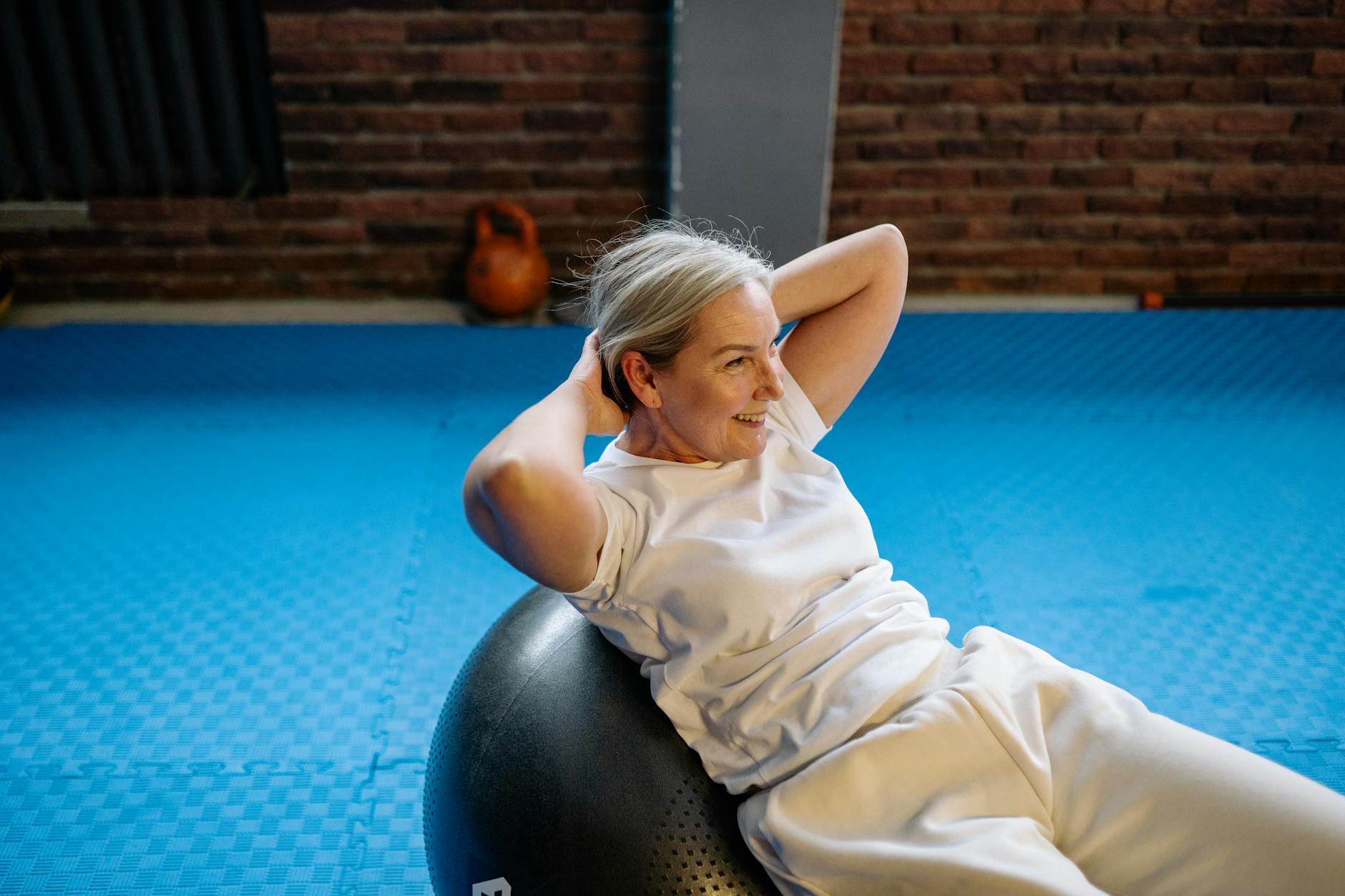
One in four adults over 65 falls each year, according to the CDC. That's not meant to scare you — it's meant to point at something hopeful. Balance is trainable. At almost any age, with almost any starting point, the nervous system and the little stabilising muscles around your ankles, hips, and spine will answer back when you ask them to work.
I'm Marischa; a NASM-certified trainer with a Senior Fitness Specialist focus. Most of the women I coach come to me because someone in their life, a daughter, a doctor, a friend who fell, has said the word "balance" with worry in their voice. My job is to take that worry and turn it into a plan. Below are ten exercises I use with clients in their 60s, 70s, and 80s. Do them in order. Start with a sturdy chair or kitchen counter within arm's reach. Work up slowly.
Before You Start
Wear flat shoes or go barefoot on a non-slip surface. Stand near a wall or counter. If you've had a recent fall, surgery, or diagnosis that affects your balance (inner-ear issues, Parkinson's, neuropathy), please check with your doctor first, and read our safety tips before you begin.
How often? Three to five days a week, 10–15 minutes. Research summarised by the National Council on Aging shows that consistent balance training reduces fall rates meaningfully; but only if you actually do it.
1. Tandem Stance (Heel-to-Toe Hold)
Place one foot directly in front of the other, heel touching toe, like you're standing on a tightrope. Hold the counter lightly. Aim for 30 seconds per side.
Tip: If this feels easy, try letting go with one hand, then both. The point isn't to wobble dangerously, it's to teach your ankles and hips to make tiny corrections.
2. Single-Leg Stand
Stand tall. Lift one foot an inch off the floor and hold. Start with 10 seconds per side, build to 30.
Form cue: Keep your eyes forward, not on your feet. Your inner ear and visual system work together; staring down tricks both.
3. Heel-to-Toe Walk
Walk forward placing the heel of the front foot directly in front of the toes of the back foot. Ten steps forward, turn, ten back. Hands along a wall if needed.
This mimics the test physical therapists use to assess fall risk. Practising it can meaningfully lower your score on that test over weeks of consistent work.
4. Sit-to-Stand
From a sturdy chair, stand up without using your hands if possible. Sit back down with control. Ten repetitions. This is balance and strength, and it's one of the strongest predictors of independence in later life, as Harvard Health has noted repeatedly.
5. Weight Shifts
Stand with feet hip-width apart. Slowly shift your weight onto your right foot until the left foot is nearly weightless. Hold five seconds. Switch. Ten per side.
Why it matters: Most falls happen during transitions — stepping off a kerb, turning in the kitchen. Weight shifts rehearse exactly that moment.
6. Toe Raises and Heel Raises
Holding the counter, rise onto your toes, lower, then rock back onto your heels (toes off the floor). 15 of each.
These strengthen the calves and shins, which are your ankle's front-line fall-prevention muscles. Weak shins are an under-appreciated reason older adults trip.
7. Clock Reach
Imagine a clock on the floor around your right foot. Stand on the right leg, lightly touching the counter. Tap your left toe to 12, then 3, then 6, then 9. Switch legs.
Honest opinion: this is my favourite balance drill. It challenges you in every direction, which is how real life challenges you.
8. Marching in Place
Lift one knee up to hip height, then the other. 30 steps. Hands off the counter if you can.
Great warm-up, great standalone. Pairs beautifully with our walking habit guide if you're building a daily routine.
9. Side Leg Raises
Stand tall, holding the counter with one hand. Lift your right leg straight out to the side, keeping your torso upright. Lower with control. 10 per side.
This wakes up the gluteus medius, the hip muscle that keeps your pelvis level when you walk. A sleepy glute medius is behind a lot of unsteadiness.
10. Backward Walking
In a safe hallway or along a wall, walk 10 steps backward, slowly. Turn and repeat.
We spend 99% of our lives walking forward. Walking backward trains the opposite muscles and sharpens proprioception. Your brain's sense of where your body is in space.
Putting It Together: A 12-Minute Routine
Here's a flow I give my clients:
- Marching in place — 1 minute
- Weight shifts: 10 per side
- Toe and heel raises, 15 each
- Single-leg stand, 30 seconds per side
- Tandem stance: 30 seconds per side
- Clock reach, 4 points per side
- Side leg raises; 10 per side
- Sit-to-stand — 10 reps
- Heel-to-toe walk: 10 steps each direction
- Backward walking: 10 steps
That's it. Three times a week minimum. Five if you're motivated.
What Progress Looks Like
You won't feel dramatic changes in week one. Around week three, most of my clients notice something small, they step off a kerb without thinking, or they reach for a high cupboard without that tiny lurch. By week eight, the sit-to-stand test improves measurably. The National Institute on Aging groups balance as one of the four pillars of healthy ageing for exactly this reason.
When to Push, When to Hold Back
If you feel dizzy, stop and sit. Dizziness is information, not weakness — tell your GP about recurring dizziness because it often has a treatable cause. If a movement causes sharp pain (not muscle fatigue: actual pain), skip it. Pair these balance moves with gentle strength work for your knees; we wrote a companion guide on strengthening knees after 60 that complements this routine beautifully.
The Real Point
Balance training is never glamorous. No one posts clock reaches on Instagram. But it's one of the highest-return things a woman over 60 can do for her future. Falls are the leading cause of injury-related death in older adults, and they're largely preventable. Spend twelve minutes, three times a week, and you tilt the odds.
Start today. Don't wait until you "feel ready." Stand up, put a hand on the counter, and try exercise number one. That's the whole beginning.
If you'd like a structured programme with video demonstrations, take a look at our full exercise guide or create a free account to track your progress. Your future self — the one still gardening at 85: will thank you.