How to Strengthen Aging Knees (Without Making Them Worse)
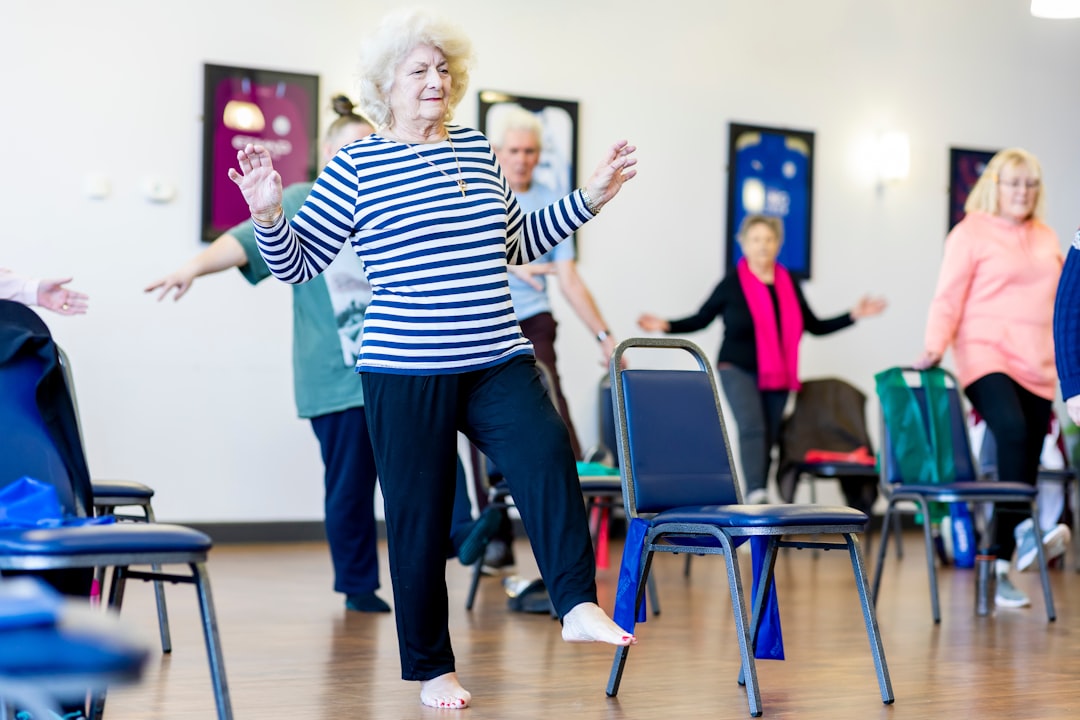
"Will exercise wreck my knees?" I hear a version of that question almost every week. And it makes sense — knees are the joint women over 60 worry about most, often because a mother or aunt ended up with a replacement, or because the stairs have started talking back.
Hi, I'm Marischa, NASM Certified Personal Trainer and Senior Fitness Specialist, and I want to answer the knee questions my clients actually ask. Not the polished versions, the real ones, the "is it okay if..." ones. Here we go.
Can I strengthen my knees if they already hurt?
In most cases, yes — and strengthening them is often what reduces the pain. The muscles around the knee (quadriceps, hamstrings, glutes, calves) are your knee's shock absorbers. When they're weak, the joint itself takes every ounce of impact. the NHS knee pain overview and the CDC's arthritis overview both make this point repeatedly: strengthening the surrounding muscles is first-line treatment for knee osteoarthritis, not a nice-to-have.
The caveat: if your knee is swollen, hot to the touch, giving way, or you've had a recent injury, see your GP or physio before starting any programme.
What's the single best exercise for sore knees?
If I could only pick one, I'd pick the sit-to-stand. From a sturdy chair, stand up using as little hand assistance as possible, then sit back down with control. Three sets of 10, three times a week.
Why? It trains the exact movement pattern, standing up. That you do a hundred times a day. It strengthens quads, glutes, and core all at once. And you can scale it: start with a higher chair or cushions, progress to a standard chair, then to a lower seat, then with a small weight.
Are squats bad for my knees?
No — done correctly, squats are usually good for your knees. What's bad is a deep, uncontrolled squat with poor form. Start with a wall squat (back against a wall, slide down maybe 6 inches, hold 10 seconds). Progress to chair squats (lower down until your bum taps the chair, stand back up). If that feels solid, you can graduate to a free-standing shallow squat.
I wrote a full, step-by-step piece on how to do a squat safely after 60, worth reading before you go deeper than a chair squat.
Should I avoid stairs?
Please don't. Stairs are one of the best functional exercises you have, and avoiding them often makes the problem worse because the muscles that stabilise the knee get weaker from disuse. The NHS lists stair climbing as a recommended everyday strength activity.
Two form cues: step through the heel (not the toe) on the way up, and control the descent. Don't just drop your weight. If one knee is much weaker, lead with the stronger leg going up and the weaker leg going down, for now.
What about lunges?
Lunges are fantastic for the knees but they're also the exercise most often done badly. If you're new to lunges after 60, I'd skip full lunges for the first few weeks and do stationary split squats with a light hand on a counter: one foot forward, one back, dip straight down a few inches, press back up. Small range. Ten per side.
Does walking help knee pain?
Usually, yes — gentle, regular walking is one of the most-studied interventions for knee osteoarthritis. Guidance from the Arthritis Foundation shows consistent walking reduces pain and improves function in older adults with mild-to-moderate knee OA. The trick is to build up gradually; don't jump from zero to an hour.
Our piece on how 30 minutes of walking a day can transform your health has a sensible on-ramp.
Are there exercises I should avoid?
Yes, a few I'd be cautious with if your knees are already cranky:
- Deep lunges or deep squats before you've built base strength
- Jumping, hopping, jogging on hard surfaces (early on)
- Leg extension machine with heavy weight (the mechanics load the kneecap a lot)
- Twisting movements under load (tennis-style pivots, some dance steps)
This isn't a "never" list. It's a "not first" list. Build a base with chair-based strength work and low-impact exercise for four to six weeks, then reassess.
What about my hamstrings and hips?
This is the question more women should be asking. Weak glutes and tight hamstrings are often an under-recognised contributor to knee pain in women over 60. Specifically: when the gluteus medius on the side of your hip is weak, your knee tends to collapse inward when you walk or climb stairs, which grinds the joint.
Three exercises that fix this:
- Glute bridges, lie on your back, knees bent, lift your hips. 12 reps.
- Clamshells — side-lying, knees bent, lift the top knee keeping feet together. 12 per side.
- Standing side leg raises, hold a counter, lift one leg out to the side. 10 per side.
Do I need supplements for my knees?
Honestly? For most women, no. The evidence for glucosamine and chondroitin is mixed at best. What's far more consistent in the research is that adequate protein intake supports muscle around the joint, and adequate vitamin D supports bone health. I wrote about protein needs in detail in how much protein do women over 60 really need.
How long until my knees feel better?
Most of my clients feel a difference in two to four weeks, not a miracle, but enough to notice. Significant improvement usually lands around the 8–12 week mark. A common pattern I see: someone arrives barely able to go down stairs without pain, and after 10 weeks of twice-weekly strength work and daily walking is comfortably walking gentle trails again. That pace is typical, not exceptional.
What if nothing I'm doing helps?
Then it's time to involve a professional. Persistent knee pain that doesn't respond to four to six weeks of consistent strengthening warrants a physio assessment. Sometimes it's a meniscus issue, sometimes a bursitis, sometimes a biomechanical quirk a trained eye can spot in 30 seconds.
Strong opinion here: I see too many women suffer for years because they were told to "just rest" — rest alone, without strengthening, is often the wrong prescription for chronic knee pain.
A Simple Starter Routine
Three times a week, 15 minutes:
- Sit-to-stand: 3 × 10
- Wall squat hold: 3 × 15 seconds
- Glute bridge: 2 × 12
- Standing side leg raise: 2 × 10 per side
- Standing calf raise: 2 × 15
- Gentle knee extensions (seated, no weight): 2 × 12
Pair that with a 20-minute walk on the non-strength days, and you've got a solid knee rehab foundation.
If you'd like a structured programme with demonstrations, our exercise guide has progressions specifically for sore knees. Or create a free account to track your sessions, I'm biased, but consistency is the whole game.
Your knees aren't finished. They're waiting for you to make them strong again.