Is Walking Enough Exercise in Your 60s? An Honest Answer
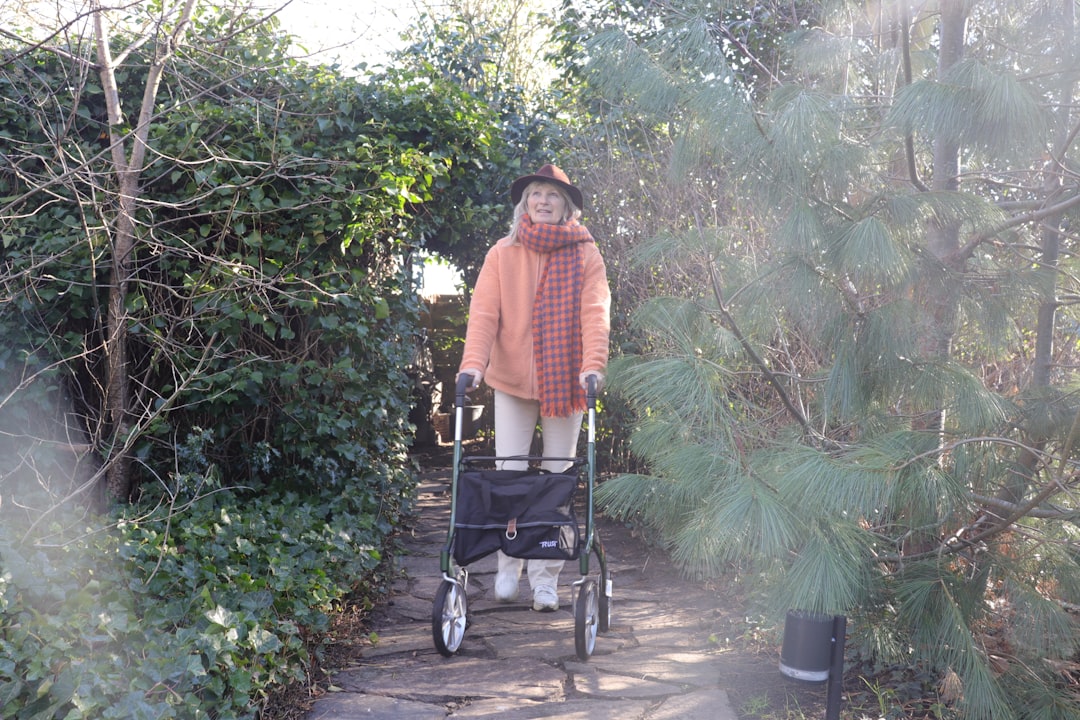
Here's a question I get at least once a week: "I walk every day. Isn't that enough?"
I'll give you my honest answer, the one I give my clients over coffee. Walking is brilliant. It's free, it's social, it's kind to your joints, and the research backing it up is deep. But "is walking enough?" depends on what you mean by enough — and for most women over 60, the honest answer is: walking is a wonderful foundation, and it's not, by itself, the whole house.
Let me explain what I mean.
What Daily Walking Actually Does for You
The evidence is substantial. Regular brisk walking lowers the risk of heart disease, stroke, type 2 diabetes, and some cancers. Harvard Health has written extensively about the cardiovascular benefits, and the American Heart Association treats walking as a first-line prescription for heart health.
Specifically, daily walking tends to deliver:
- Improved cardiovascular fitness. Your heart becomes more efficient at pumping blood
- Better blood sugar control, a post-meal walk can blunt a blood-sugar spike meaningfully
- Reduced risk of depression and cognitive decline — the the National Institute on Aging database has dozens of studies linking walking to better mood and preserved cognition
- Improved joint health, yes, really; moderate walking feeds cartilage and lubricates the joints
- Better sleep, stronger immunity, and lower all-cause mortality
All of that from putting one foot in front of the other. Not bad.
What Walking Doesn't Do (Much Of)
Here's where I have to be honest with you, because a lot of fitness writing online is a little too nice about this.
Walking doesn't build much muscle. Walking is a cardiovascular activity; it maintains a baseline of leg strength but it doesn't meaningfully counteract the age-related loss of muscle mass called sarcopenia. Research suggests that, after age 50, women tend to lose roughly 1% of muscle mass per year on average unless they actively train to preserve it. Walking alone doesn't reverse that curve.
Walking doesn't build much bone. To stimulate the bone-building process in women past menopause, you generally need impact (walking provides some) plus loading (lifting something heavier than body weight). The Bone Health and Osteoporosis Foundation is clear that walking is supportive but not sufficient for most women at risk of osteoporosis.
Walking doesn't challenge balance much. You're walking forward on flat ground. Real life is side steps, reversing out of the car, catching yourself on an uneven paving slab. Walking won't train those reactions the way specific balance exercises will.
Walking doesn't address posture. If you walk with a rounded back, you're reinforcing a rounded back for another 30 minutes.
The Official Guidelines
The American College of Sports Medicine and the National Institute on Aging recommend older adults include four types of exercise: aerobic (walking counts), strength, balance, and flexibility. Walking is one quarter of a healthy exercise pattern. A great quarter. But still a quarter.
How Much Walking Is Enough Walking?
If walking is your main cardio, aim for:
- 150 minutes of moderate-intensity walking per week (that's 30 minutes, 5 days a week, at a pace that lets you talk but not sing)
- Or 75 minutes of more brisk walking
- Or a mix
If you're already hitting this, congratulations. Your cardio base is in solid shape. I've written about the transformative effect of a daily 30-minute walk if you need a blueprint for getting there.
What to Add — And Why
If walking is your only exercise, here's the honest priority order:
1. Strength training (two sessions a week)
This is the non-negotiable add. Even ten minutes of strength work, twice a week, starts to protect muscle and bone. It doesn't have to be a gym, a resistance band, two cans of beans, or body-weight squats count.
I wrote a beginner's guide called strength training after 60: everything you need to know specifically for women who have never lifted anything heavier than a grandchild.
2. Balance work (three short sessions a week)
In several studies, as little as ten minutes of focused balance work, three days a week, has been associated with meaningful reductions in fall risk. See the guide I wrote on 10 balance exercises. They take almost no equipment and no space.
3. Flexibility / mobility (daily, 5–10 minutes)
A short morning stretching routine keeps you moving well for walks and everything else.
A Realistic Weekly Plan That Builds On Your Walking
If you already walk 5 days a week, don't stop. Add:
- Monday: 30-minute walk + 10 minutes balance work
- Tuesday: 30-minute walk + 15 minutes strength training
- Wednesday: 30-minute walk + 10 minutes stretching
- Thursday: 30-minute walk + 10 minutes balance work
- Friday: 30-minute walk + 15 minutes strength training
- Saturday: Longer walk (45–60 minutes) or a different activity
- Sunday: Rest or gentle stretching
That's not an extra hour a day. It's roughly 70 extra minutes a week, and it transforms your results.
My Opinionated Take
Walking is the single most underrated exercise for women over 60. It's also the single most overrated "complete solution." I'd rather see a woman walk 20 minutes a day and do 10 minutes of strength twice a week than walk an hour a day and do nothing else. The first pattern ages far better than the second.
A Note on Intensity
One more thing. Most women I meet walk at a gentle, conversational pace, which is lovely but won't deliver the full cardio benefits. Two or three times a week, try to include a brisk walk where you can still talk but couldn't comfortably sing. Or add short pickups. Walk fast for 2 minutes, normal for 3, repeat. Your heart adapts to what you ask of it.
So, Is Walking Enough?
Walking is enough to be the best single habit you adopt.
Walking is not enough, on its own, to prevent muscle loss, support bone density, prevent falls, or maintain the kind of functional strength that keeps you independent into your 80s and beyond.
Here is what helps: you don't have to choose. Keep walking. Add the other three pieces. You'll be astonished at how much difference 30 extra minutes a week can make.
If you'd like a structured plan that combines all four pillars, have a look at our exercise guide or create a free account to save your routines. And if you only take one thing from this article: don't stop walking. Just don't only walk.